Wednesday, January 11, 2012

A STREETCAR NAMED DESIRE (1951)


Classics Revisited Book Group (Posting 4)


A Streetcar Named Desire directed by Elia Kazan
or
A Streetcar Named Desire by Tennessee Williams

The thing about comparing a movie to the text of the play is that the play is written to be performed and watched over being read. I would certainly do both with A Streetcar Named Desire, but regardless, the original movie does have much going for it. The strength of Tennessee’s story, the New Orleans setting brought to life by director Elia Kazan and the great cast led by Vivien Leigh and Marlon Brando all make this required viewing.

There were a couple of censorship issues that the movie couldn’t deal with adequately. I’m speaking primarily of Blanche Du Bois (Vivien Leigh) confessing to Mick (Karl Malden) that her ex-husband was a homosexual. Since she couldn’t say it this way, the script changes the confession to say that he was a …poet. What was that, again?

Another censorship issue that actually works to the films advantage is the rape scene, which is symbolized by a crashing mirror. The audience doesn’t see exactly what happens and this makes the drama and horror of it more effective.

Since I’m not making a real choice between play or movie here, I will choose the Kazan/Brando collaboration on Streetcar over the Kazan/Brando collaboration on On the Waterfront just because I felt the need to choose something.

Sunday, January 8, 2012

HAMLET (1948) & HAMLET (1996)


Classics Revisited Book Group (Posting 3)

Hamlet directed by Kenneth Branagh, Hamlet directed by Laurence Olivier
or
Hamlet written by William Shakespeare.

I do have a bone to pick with the 1001 Movie list. I know they are trying to “not give automatic preference-free passes as it were to self-consciously quality productions or high cinematic art,” but other than the Kurosawa adaptations of Shakespeare, the only 1001 listings for the bards adaptations are Orson Welles’s Chimes at Midnight and Olivier’s Henry V. That’s it! So we’re supposed to accept that Pretty Woman is essential viewing and no version of Hamlet is quite good enough to make the cut? Oh! Something is indeed rotten in the state of Denmark and time is most definitely out of joint!

Hamlet was the first Classics Revisited book group that I held. Before I read it, I watched several film versions. My favorite is the Kenneth Branagh Hamlet, which films the entire play at about four hours. Others still revere Olivier’s award winning 1948 adaptation, though much of the story is heavily edited. It may be of interest to watch the BBC version just to see Derek Jacobi (Claudius from Branagh’s Hamlet) as the Dane and Patrick Stewart as Claudius. The Franco Zeffielli/Mel Gibson version is worth viewing, though wasn’t my favorite. You may also want to see the odd modern day Ethan Hawke Hamlet which at least gives us Bill Murray as Polonius and Steve Zahn as Rosencrantz (or does he play Guildenstern?).

Movie or Play? That’s simple. See a movie version. Read the play. And see it performed in live theater. Be in a version if you have the resources. It’s Hamlet! Do it ! Just do it!
And while you’re at it, watch Series 1 of Slings and Arrows.

Alas poor Yorick! I knew him Horatio, a fellow of infinite jest,
of most excellent fancy, he hath borne me on his back a thousand times-
and now how abhorred in my imagination it is!

Hamlet
5.1.156


Thursday, January 5, 2012

RAN (1985, JAPAN)


Classic Revisited Book Group (Posting 2)

Ran directed by Akira Kurosawa
or
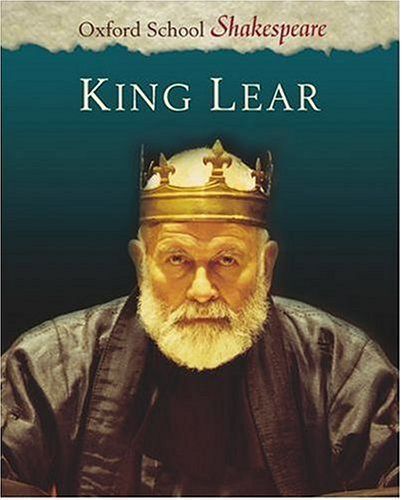
King Lear by William Shakespeare

Ran is the second adaptation of Shakespeare by Akira Kurosawa that is also in the 1001 movie book. This version of King Lear is certainly of merit in its own right, though I can’t say I like it quite as much as Kurosawa’s Macbeth adaptation, Throne of Blood. Another very interesting King Lear adaptation is Kozintsev’s 1970 Russian version. Also check out the recent BBC adaptation with Ian McKellan as Lear.

And don’t forget to watch series 3 of the Canadian television show Slings and Arrows.

Play or movie?
I’ll go with the original this time over its Japanese counterpart because you really should read King Lear. Why? Because if one ever calls you the following, you may want to know its original source.

A knave; a rascal; an eater of broken meats; a base, proud, shallow, beggarly, three-suited, hundred-pound, filthy, worsted-stocking knave; a lily-livered, action-taking knave, a whoreson, glass-gazing, super-serviceable finical rogue;
One-trunk-inheritingslave; one that wouldst be a bawd, in way of good service, and art nothing but the composition of a knave, beggar, coward, pandar, and the son and heir of a mongrel bitch: one whom I will beat into clamorous whining,
If thou deniest the least syllable of thy addition.

King Lear
2.2.1090

Monday, January 2, 2012

THRONE OF BLOOD (1957, JAPAN)


Classics Revisited Book Group

Since 2005, I have led a book discussion group at our library in the hope that it would give me an incentive to read some of the more famous works in literature or revisit (hence the name of the group) works I haven’t read in a long time.

I usually tried to find an accompanying movie to go with the book or play when applicable. Sometimes the movie based on the classic book turned out to be as famous as the original work (To Kill a Mockingbird, Gone With the Wind.) Other times there was no accompanying movie to go along with the original source. (I’m still waiting for movie versions of Ellison’s Invisible Man, Faulkner’s As I Lay Dying and Salinger’s Catcher in the Rye.)

Looking at my list of books read again, I have noticed that many of these movies that sprang out from books are also on the 1001 Movies You Must See Before You Die list, so I’ve decided to grandfather in the ones I’ve seen as well as add some of the also-rans for this blog.

Classics Revisited (Posting 1)

Throne of Death directed by Akira Kurosawa
or
Macbeth by William Shakespeare

First of all, Kurosawa’s film set in Samurai Japan is not a word for word adaptation of Shakespeare’s Macbeth, though it does follow the story fairly closely. There are certainly other interesting literal film adaptations of the story, including the Roman Polanski version from 1971 or Orson Welles’s 1948 version. The Trevor Nunn Royal Shakespeare company adaptation from the 1970’s with Ian McKellan and Judi Dench may be the best of the bunch. Also, see Series 2 of the Canadian television show Slings and Arrows if you get the chance.

But Throne of Blood or the orignal text? I’ll go with Throne of Blood just because it’s such a great cinematic experience and probably is only second to The Seven Samurai on my favorite Kurosawa movie list. It’s scary, dramatic, intense and if you like action, make sure to check out the film’s final scene.

But you really should read Macbeth, too.

Tomorrow, and tomorrow, and tomorrow.
Creeps in this petty pace from day to day,
To the last syllable of recorded time;
And all our yesterdays have lighted fools
The way to dusty death. Out, out, brief candle!
Die!
Life‘s but a walking shadow, a poor player
That struts and frets his hour upon the stage,
And then is heard no more; it is a tale
Told by an idiot, full of sound and fury,
Signifying nothing.


Macbeth 5.5.27