Showing posts with label 1990's. Show all posts

Saturday, February 29, 2020

THE UP SERIES (1964-2019, GREAT BRITAIN)

Given me a child when he is seven and I will give you the man.-Jesuit proverb

The featured players of the Up series
at different life stages

In 1964, Granada television in Britain chose fourteen seven-year-old subjects for a television special about what it was like to be that age. This original film was directed by Paul Diamond and was originally supposed to be a one and off special. The subjects of the film were chosen by a young researcher named Michael Apted, who saw the potential for something really special here. Apted took over as director of the project and filmed the children again at age fourteen in 1970. He then filmed all the subjects in the film every seven years (all that would participate) all the way until 63 Up in 2019.

I had heard about this series over the years, but never watched it. We got the 56 Up! DVD at the library a couple of years ago, but really wanted to see the films from the beginning. In recent weeks, I noticed Britbox had all the episodes and my wife and I decided to plunge in and watch them.

I don't binge watch shows often, but The Up Series is definitely one I'd recommend going that route with. I feel like I just met these seven-year-old kids a couple of weeks ago and watching a show a night, they quickly are all reaching retirement age. It acts like an only slightly less speedy Picture of Dorian Gray with the featured kids.

We see the participants make schooling decisions, marriage decisions, career decisions and family decisions. Through the episodes, the extended family of the participants become players in this drama as well. Other participants keep their family out of it entirely. We also see past shows cleverly edited into each new show to give the viewer perspective.

One of the elements in the choosing of the original subjects is class. You have the prep school boys, seemingly born with silver spoons in their mouth and poorer East End kids that have to struggle for everything. The truth is of course much more complicated than that.

Here are the subjects for the film:

John, Andrew and Charles on the couch
in 14 Up

The Three Prep School Boys on the Couch
John Brisby, one of the upper class kids, was seemingly on the path to being a barrister from age seven. He likes to point out in later episodes that he had to struggle a lot more than what is portrayed in the earlier films.

Andrew Brackfield was one of the funniest of the seven year old kids, going on about he read The Financial Times on a daily basis. He later became a solicitor, but seems to spend a lot of time in his garden as the years go on. He appears to have one of the happier marriages and families in the film.

Charles Furneaux is the third of the Prep School boys. Charles didn't participate in any films after 21 Up, despite later becoming a documentary filmmaker himself!

Jackie, Lynn and Sue on the slide at age seven

The Three Working Class Girls on the Couch
Jackie Bassett is one of the three girls in the film that are usually filmed together. Her life has had her ups and downs with marriages, kids, work and health. She often seems to have a love/hate relationship with director Apted. I find her one of the most interesting subjects in the film.

Lynn Johnson was one of Jackie's friends who definitely had her ups and downs. She married young and had a family early, but kept her marriage together throughout her life. I certainly like the fact that she worked at libraries and a bookmobile for many years. She had many health issues over the years which she talks about in many episodes. She died in 2013 at the age of 57.

Sue Davis is the third of the three girls filmed together in episode one. She had her ups and downs with marriage and divorce over the years. She also had a potential singing career that she points out she was never able to follow through with. In later years, she is seen as being happily engaged to the same man for 21 years!

The Charity Boarding School Classmates
Symon Basterfield was the only participant of mixed race in this film. He worked at various jobs over the years which the viewer gets to experience vicariously (There's Symon on the fork lift again!). He married and had five kids only to divorce. His second wife was a strong presence in 49 Up and 56 Up.

Paul Kliegerman was also one of the funniest of the kids at seven. The clip that they show about his fear of marriage because his wife might serve him greens makes me laugh every time they show it. In actuality, Paul has had the same wife since 21 Up, and we see many of their travels through the outback and raising of their family over the years. One of the most likable participants in the film, we see Paul reunited with his classmate Symon in 49 Up (or was that 42 Up?)

The entire group together at 21 Up

The Academics
Bruce Balden may be the person I identify the most with in the film. Always concerned about social issues and injustice early on, he becomes a teacher in the inner city and in Bangla Desh for awhile. It didn't seem like he would ever get married, but did in 35 Up in a ceremony conducted by fellow Up participant Neil Hughes.

Nick Hitchon started out on a farm and went to boarding school before going to Oxford and eventually becoming a professor specializing in Nuclear Fusion at the University of Wisconsin. Nick's first marriage is documented in 28 Up, but that didn't last and seems happy with his second wife in later episodes. 

I just want to promote me band!
Peter Davies was a Liverpudlian youth who in 21 Up said some negative things about the Thatcher Administration which he got some criticism for and decided not to participate in the series again until 56 Up to promote his folk band!

This is pointless and silly!
Suzy Lusk had a most interesting evolution on the show. She went from being one of the rich kids in the beginning to being from a broken home and deciding the project was "pointless and silly" by the age of 14. At 21, she was an angry chain-smoking young lady who would never want to have kids and was mad at the world. By 28, she married someone who seemed to change her worldview for the better and has appeared to have a happy life (with kids!).

Tony Walker at 7 Up and 56 Up
The breakout stars
Tony Walker-"I want to be a jockey when I grow up. I want to be a jockey when I grow up!" I always quote Tony's seven-year-old aspirations to my wife before we start a new episode. Tony is one of the lower East Side kids who did indeed become a jockey for awhile before becoming a taxi driver among other things. The fast talking Tony seems to be one of those people who can probably get away with a lot just by talking his way out of things. Married at 28, his wife was featured in all the subsequent episodes and they are not afraid to speak openly about the highs and lows of their relationship.

Neil Hughes at 56 Up and 7 Up

Neil Hughes was the Liverpool youth who had aspirations, yet never seemed to find his way. He was often depicted throughout the run of the show as homeless or suffering from a form of mental illness-yet always finding a way to survive. He later became a local councilman and even a preacher (performing the marriage ceremony for Bruce Balden).

I think for the most part the participants haven been shown in a positive light. I mean there aren't any villains in this piece (Maybe Charles, only because he wouldn't participate after 21 Up) and I hope the lives of all of them continue to improve through 63 Up, 70 Up, 77 Up...

Friday, December 20, 2019

THE HORSE THIEF (1986, CHINA), THE BLUE KITE (1993, CHINA), SPRINGTIME IN A SMALL TOWN (2002, CHINA)

The Horse Thief

Sometimes the circumstances and mood aren't quiet right to see a certain movie.

The Horse Thief is Tian Zhuagzhuang's story of a poor rural man in Tibet who tries to take care of his family. It starts by him stealing a horse, which isn't ultimately enough to save his dying young son. We see a lot of religious rituals in the greater society and mostly hardship and strife in the context of the family of the man, his wife and son. We don't get to here much dialogue either.

I watched this film in five parts on the Daily Motion website. Perhaps I should have waited to find it on DVD as the frame froze up more than once during my viewing. I watched parts of it more than once, but it wasn't really connecting with me the way that it perhaps could have.

The Blue Kite

The same director's The Blue Kite has plenty of dialogue and is set in a specific time, starting in China at the time of Stalin's death in 1953. The film depicts a lot of suppression by the Communist ruling elite for the main family in the film, which got Zhuangzhuang exiled from making films in China and the film banned. The most interesting part of this film is the succession of men in the life of a young woman and her son named Tietou. The struggles of each man in making the family is slightly different and all are hampered by the Communist regime. Tietou eventually runs out of father figures and is taken away by the state to a somber image of a blue kite. I could honestly get my teeth into this one a little more that The Horse Thief, though The Blue Kite also wasn't without some slow parts.

Springtime in a Small Town

Springtime in a Small Town is Zhuangzhuang's remake of  the 1948 classic, Spring in a Small Town, The new film has a couple of strikes against it right off the bat. First, it is a remake of a beloved movie (at least in China) that doesn't have a lot of action elements for the film to update to begin with. It also has to balance the line between being faithful to the original while being distinctive enough to justify a reason for remaking it. Color photography also seems like a drawback here.

I find this remake to have merit despite these drawbacks.  It is interesting to note the similarities between this film and the original and note where director Tian Zhuangzhuang decided to make some changes. Springtime in a Small Town is worth seeing, but the original alone may be enough for some viewers who may not want to make a second trip into the rubble.

 I would probably concede that The Blue Kite is the best film of this trio of films, but I probably liked Springtime in a Small Town the most.

Thursday, December 12, 2019

NO FEAR, NO DIE (1990, FRANCE), COCKFIGHTER (1974)

Jocelyn (Alex Descas) admires his cock
in No Fear, No Die

Dah (Isaach De Bankole)  and Jocelyn (Alex Descas) are two Caribbean men who train and fight roosters for profit (they hope) in France under the guidance of Pierre, who supplies the area where the fighting and wagers take place. It is an interesting though unpleasant character study of a rather seedy business, which ends with the death of the prize rooster (Named No Fear, No Die) as well as one of the men.
The word cock as described as a rooster used to fight with can clearly be seen as an extension of the other common meaning of the word. Pierre says something to the effect of “Once you get the taste of cock, you can never give it up.” He’s talking about fighting roosters, isn’t he?

Musical reference: The title No Fear, No Die keeps making me think of the Bob Marley song No Woman, No Cry. That song is not used in the movie, but the Marley song Buffalo Soldiers is used twice.

Casting notes: Isaach De Bankole and Alex Descas were later re-teamed in one of the sketches in Jim Jarmusch’s Coffee and Cigarettes.

Solveig Dommartin in No Fear, No Die

The lovely Solveig Dommartin plays the female lead here and previously played the acrobat in Wings of Desire.


Warren Oates strokes his cock
in Cockfighter

In Monte Hellman’s Cockfighter, the cockfighter played by Warren Oates has rendered himself mute (or castrated) until he gets named Cockfighter of the Year. When he finally does win the prize, he can speak, but his girlfriend no longer wants to be with someone who is involved in something so sordid as cockfighting. He then pulls the head off his prize cock (another form of castration) and declares that she still loves him even though it appears she has walked out on him for good.

The I remember reference: I remember this movie as being controversial on release and reading an article in the Atlanta Constitution about it at the time, but have never seen it until now! The movie being filmed in Georgia may be why it got a little extra ink in that paper during the initial theatrical run.

Casting notes: For fans of Monte Hellman’s Two-Lane Blacktop, we have a scene where hitchhiker Lori Byrd is driving in a car with Warren Oates when she is not driving with The Mechanic and The Driver. The first scene in Cockfighter has Byrd and Oates driving down the road almost as if they were still in the previous movie! This is a nice touch. Hitchhiker Harry Dean Stanton form Two-Lane Blacktop is also along for the ride in Cockfighter.


Also of note: Cockfighter producer Roger Corman states that this film was one of the few of his movies that didn't turn a profit. For more on Corman, you might want to check out the book Crab Monsters, Teenage Cavemen and Candy Stripe Nurses: Roger Corman, King of the B-Movie.


Cockfighter (the novel) author Charles Willeford has a nice supporting role as one of the guys who runs the fights in Cockfighter (the movie).

Cockfighter was also released under
the title Born to Kill. The scenes depicted
on this poster must have been from some other
movie, because I certainly didn't see them 
in Cockfighter!

Conclusions: Personally, I think two movies back-to-back about cock fighting may be enough for the week... or maybe forever.
Friday, December 6, 2019

UNDERGROUND (1995, SERBIA), ALL THE CITIES OF THE NORTH (2016, SERBIA)

Underground


Underground is a loud, epic story of Yugoslavia seen through the eyes of two friends and their female companion starting during the time of World War II and going through the Cold War and culminating in the Yugoslav wars of the 90's. The title comes from one of the friends creating a fantasy underground world that many of the citizens live in and do not know that WWII is over and therefore safe to come out! This isn't a perfect film by any means, but I do really get a feeling of the country of Yugoslavia/Serbia here and I'm glad this one popped up on Kanopy recently.

All the Cities of the North

As I was thinking of a movie to pair with Underground, another Serbian movie popped up on Kanopy called All the Cities of the North. A review on Rotten Tomatoes from reviewer Robert Koehler states that "we should measure the films greatness by asking someone who has seen it whether or not they could compare it to anything else." I was intrigued enough to watch.

What we have with this film is mostly three guys living in what appears to be an abandoned building surrounded by pretty much an abandoned city. We see them do mostly menial tasks: washing dishes, taking showers, making fires or even sleeping. When they get bored, they wrestle. The movie contains no on-screen dialogue. We do have voice-over narration every ten minutes or so and gets some hints about the abandoned city and some esoteric philosophy about princes and some other musings that are listed in the credits as being from a Jean-Luc Godard film. All the Cities of the North. isn't for the faint of heart or someone waiting for these characters to do something! The jury is still out with me on this one.

Oh, and I do have a movie to compare it to: Too Early, Too Late. Except in All the Cities of the North the "action" is dramatized and not in the form of a documentary.

Monday, December 2, 2019

THE TIN DRUM (1979, GERMANY), EUROPA, EUROPA (1990, GERMANY)

 Oskar growing up mentally faster than physically
in The Tin Drum

The Tin Drum is a film about a young man named Oskar who avoids the Nazis by just not growing past age three. In his case, it's more than just the Nazis, it's the whole awful grown up world. The Tin Drum is an epic tale of the war, cleverly seen through the eyes of an outsider by his circumstance who is nevertheless right in the middle of many of the atrocities of war.

I've read some of Gunter Grass's original novel on which the movie is based. I got through about a hundred pages before getting just too bogged down and a bit overwhelmed by the whole thing. Maybe I'll try again...


Europa, Europa is a film about a young man named Solomon who avoids the Nazis by posing as one of them. Solomon lives with his Jewish family in Nazi Germany and as you can imagine for the time, he is displaced and many in his family are killed. He winds up in a Soviet orphanage where he is trained to be a good Bolshevik. The orphanage is bombed and he is captured by Nazis who he convinces that he is one of them. He is valuable to them because of his bilingual abilities. His circumcised penis is also something he has to hide at all cost to avoid his discovery of being a Jew. We showed this film several years ago at the library and it was good to watch this one again. Europa, Europa shows we do what we have to to survive and that it pays to be smart...but also pays to be lucky.  

Solomon (Marco Hofschneider) has a very 
practical reason for not going all the way with
his German girlfriend in Europa, Europa

Europa, Europa is based on the real life memoir by Solomon Perel. As of this writing, Solomon is 94 years old and still a survivor!


Friday, November 29, 2019

WHO'S THAT KNOCKING ON MY DOOR (1967), THE LAST WALTZ (1977), KUNDUN (1997), ROLLING THUNDER REVUE: A BOB DYLAN STORY (2019), THE IRISHMAN (2019)

Younger Scorsese

You can't go through the 1001 list or any kind of movie list without running into director Martin Scorsese multiple times. A student of film history, I must have come across fifty DVD's with at least a snippet of an opinion from Scorsese about one movie or another. However, there are a still few of Scorsese's own movies that I have just now added to viewing resume.

Who's That Knocking On My Door 

Who's That Knocking On My Door (1967) is Scorsese's first film and really a prototype for a lot of his later films of the mean streets. It features Harvey Keitel as a young street tough who tries to romance a girl with a secret in her past. It's interesting that Keitel's character is a stand-in for Scorsese and loves to talk on and on about movies. What better way to impress a girl than reciting the entire plotline of The Searchers!  Other familiar elements of the director come into play such as religious symbolism and unexpected twists in a romantic relationship. You also have a lot of the tough guy hanging out banter you come to expect from a Scorsese picture.

The Last Waltz

The Last Waltz (1978) is a film that I can't believe I haven't seen before! It shows the Scorsese who is pretty adept at being a music documentarian and features the last concert for The Band after sixteen years on the road. It helps in watching that I'm a fan of their music (The Night They Drove Old Dixie Down, The Weight). The Last Waltz also features guest appearances from a Who's Who of musicians I like: Van Morrison, Muddy Waters, Neil Young, Eric Clapton, Emmylou Harris and of course frequent Band collaborator Bob Dylan. Of course, never say never as The Last Waltz isn't really the last waltz as The Band is touring with Dylan in 2019!

Kundun

Kundun (1997) may seem like a departure for Scorsese with the emphasis on the spiritual quest for the Dali Lama. But isn't the director of The Last Temptation of Christ often in search of spiritual meaning? The film shows how the spiritual quest can be effected negatively by the political situation going on around you. It also depicts well the spiritual growth of the Dalai Lama as he gets older and accepting of his important place in the world. Scorsese is clearly on the Dalai Lama's team throughout.

The Rolling Thunder Revue: A Bob Dylan Story

The Rolling Thunder Revue: A Bob Dylan Story (2019) is Scorsese's recent music documentary that shows us what happened during Dylan's 1975 tour and is a most interesting trip for fans. Dylan and friends such as Joan Baez, Allen Ginsberg and Joni Mitchell and others were on parts of the tour, in which they performed mostly in small venues. The size of these venues made for some great music and is fascinating to watch now, but at the time was said to have been a financial black hole because of the limited seating capacities of the places they played. There are many interesting characters here including Ratso Sloman and Rubin "Hurricane" Carter. There are some fictional characters thrown also thrown in for better or for worse, including Michael Murphy as politician Jack Tanner The Rolling Thunder Revue: A Bob Dylan Story makes an interesting double feature with The Last Waltz.

The Irishman

So now I'm ready to watch what promises to be Scorsese's ultimate gangster epic, The Irishman. At three and a half hours, it's certainly has an epic time frame. The story of Jimmy Hoffa and his associate Frank Sheehan is a story that certainly warrants the length. It's not a conventional bio, in that we are seeing things from the perspective of Sheehan (Robert De Niro) much more than Hoffa (Al Pacino). The storytelling (with lots of narration) should be familiar to fans of Scorsese films such as Goodfellas and Casino. The Irishman has much to recommend it: the story, the setting, the performances and the chilling sudden bursts of violence. The cast is also interesting including Who's That Knocking on My Door star Harvey Keitel in a supporting role, as well as Anna Paquin, Ray Ramono and many others. But the core of the story is the main three players (De Niro, Pacino and Joe Pesci) who despite being in their late 70's, play their characters over the course of several decades. Their performances are enhanced by some high tech CGI make-up, as well as a director that is constantly reminding them of what age they are supposed to be acting like in what scene.

The Irishman is a welcome edition to the already monumental Scorsese canon. We'll see how this does at Academy Awards time.

Older Scorsese

Friday, November 22, 2019

THE RAPTURE (1991), ORDET (1955, DENMARK)

“There are two lives, the natural and the spiritual, and we must lose the one before we can participate in the other.” 
― William James, The Varieties of Religious Experience

Sharon (Mimi Rogers) explores the hedonistic side of life
with her buddy Vic in The Rapture

A hedonistic young woman named Sharon (Mimi Rogers) explores the decadent nightlife of swinging with her friend Vic (Patrick Bauchau). However, something important is brewing in the world! People are having dreams about the pearl! The rapture and the whole four horseman of the apocalypse are coming! Repent, sinner!

Sharon eventually finds Jesus, marries David Duchovny and has a daughter. A few years later, her husband is murdered. After that, she gets visions from God to go into the desert with her daughter. When God doesn't come, she kills her daughter so her offspring will ascend to heaven. She is grief stricken with what she has done, but guess what? The rapture really is coming! The horsemen are here and God only wants you to accept him and your ticket to heaven is stamped. But guess what? Sharon won't forgive God for what he pushed her to do to her daughter and the film finishes with her stuck in limbo "forever."

I can understand why The Rapture may have limited appeal. Christian viewers may be prone to reject it because Sharon ultimately rejects God. Secular viewers may find a literal Four Horseman of the Apocalypse coming as trite. I think the movie has balls in that it doesn't try to conform to anyone's expectations.

This is the third time I've seen this movie and it seems to come on my radar every ten years. I'll probably keep watching it about every ten years until I get raptured myself.

Sharon searches for God in the desert
in The Rapture

I have no basis whatever for my belief in God other than a passionate longing that God exist and that I and others will not cease to exist. Because I believe with my heart that God upholds all things, it follows that I believe that my leap of faith, in a way beyond my comprehension, is God outside of me asking and wanting me to believe, and God within me responding.
-Martin Gardner, Whys of A Philosophical Scrivener


 Johannes, the mad brother
in Ordet

Quote from the novel “Invisible” by Paul Auster.
If not for the end, Ordet would not have effected you any more than any other good film you’ve seen over the years. It is the end that counts, for in the end does something to you that is totally unexpected. And it crashes into you with all the force of an ax felling an oak.

The farmwoman who has died in childbirth is stretched out in an open coffin as her weeping husband sits beside her. The mad brother, who thinks he is the second coming of Christ, walks into the room holding the hand of the couple’s young daughter. As the small group of mourning relatives and friends looks on, wondering what blasphemy or sacrilege is being committed at this solemn moment, the would be incarnation of Jesus of Nazareth addresses the dead woman in a calm and quiet voice. “Rise up.” He commands her. “Lift yourself out of your coffin and return to the world of the living. Seconds later, the woman’s hands begin to move. You think it must be a hallucination that the point of view has shifted from objective reality to the mind of the addled brother. But no, the woman opens her eyes and just seconds after that she sits up, fully restored to life.

There’s a large crowd in the theater and half the audience bursts out laughing when they see this miraculous resurrection. You don’t begrudge them their skepticism. But for you, it is a transcendent moment. You sit there clutching your sister’s arm as tears role down your cheeks. What cannot happen has happened. You are stunned by what you have witnessed. Something changes in you after that. You don’t know what it is, but the tears you shed when you saw the woman come back to life seemed to have washed some of the poison that has been building up inside you.

My thoughts: The preceding passage was the reason I chose to see Carl Theodor Dreyer’s Ordet.

Will my reaction to viewing this film be like Adam Walker (Auster’s character) or like those in the audience who laugh at the unlikely resurrection?

Well, I didn’t laugh and even though I had already read about it in the book, I couldn’t believe Inger (the character in the film) was really going to come back to life. I can’t say my reaction was akin to Adam Walker’s, but the film (based on a play by Danish pastor Kaj Munk) was stirring. I actually felt different than Walker in that it was more than the end, it was the building towards the end. Brother number one’s loss of faith, brother number two’s overdose on Kierkegaard leading him to think he is Jesus of Nazareth and brother number three’s wish to marry a girl whose family's religion is not compatible with his are all important parts that must be understood to even appreciate the ending.

I've been doing this blog so long now, this is actually the second time I've seen Ordet, the first time being ten years ago now! I still can't figure out exactly why I like Ordet as much as I do. I can certainly understand how someone could find it quite sappy...yet somehow I don't find it that way. And I really love the mad brother (Johannes). His monotone will stay with me in dreams for some time to come. 

I thought Ordet would go well with The Rapture. God is alive in both films. In The Rapture, Sharon rejects God anyway because he led her to take away the life of her daughter. In Ordet, the husband embraces God because of the restoring of life to his wife...The varieties of religious experience indeed...Amen.

Death and resurrection
in Ordet

We must judge the tree by its fruit. The best fruits of the religious experience are the best things history has to offer. The highest flights of charity, devotion, trust, patience, and bravery to which the wings of human nature have spread themselves, have all been flown for religious ideals.” 
― William James, The Varieties of Religious Experience

Tuesday, November 5, 2019

THE EXILES (1961), HOOP DREAMS (1994)


Yvonne Williams going grocery shopping 
in The Exiles

I knew next to nothing about The Exiles, a seventy-two minute film about Indians/Native Americans in late 1950's Los Angeles when I popped the Criterion disc into the DVD player. In fact, going into my viewing I thought it was a documentary!

What we do have in this drama is the Native American/Indian people in this very small neighborhood doing various normal things in a snapshot of one night. We have a lady (Yvonne) who does the mundane grocery shopping or going to see a movie and dreams of a better life. We see several characters going out for drinks, including the jerky guy (Tommy), the guy who just sort of observes (Homer) and doesn't really react to much other than to go with the flow, and a large group that goes to a secluded place for a "49 Party", a type of traditional Native-American dance, which they do on a hill overlooking Los Angeles. Interesting for the historical value and time, movie commentator Sean Alexie (Smoke Signals, Who jokingly called it Native American Graffiti) points out that it was the first time in any film where you get to see a group of Native Americans doing something as mundane as buying gas! The film uses voice over narration and may have the feel of a Cassavetes film of the period to some, which Alexie points out.

The cinematography of the movie is very nice for something so low budget (maybe because of it?) and the final shot of the movie (below) is memorable.

Side note: They caught up to Yvonne Williams years later and she said she had never seen The Exiles, her only screen appearance.

A fun night's end in the final shot of The Exiles


Arthur Agee in Hoop Dreams

Hoop Dreams I have seen before and was a well deserved Oscar winner for Best Documentary of 1994. We follow two black youths in Chicago city schools over their four high school years whose dreams revolve around getting a chance to play basketball and perhaps getting to a point where they can reach the pinnacle and turn pro like their hero, Isaiah Thomas. It's most interesting that director is able to follow these kids around during their entire high school career and see how they develop. We see William the strong star player, whose career has ups and downs mostly due to untimely injuries. We have the smaller Arthur Agee, who actually gets kicked out of one school due to grades, but eventually makes a mark in basketball at his next school. We see the highs and lows of their family life, friends, neighborhood, coaches and teammates. We also see quite a number of scenes with Academic Counselors! A long film, but well worth your time.

Side note: In Danny Peary's Alternate Oscar book, he rates Hoop Dreams as the Best Picture Winner for 1994. This year featured Pulp Fiction, Forrest Gump, The Shawshank Redemption and several other notable films, but Hoop Dreams was Peary's choice.

William Gates in Hoop Dreams

Wednesday, October 30, 2019

A CHINESE GHOST STORY (1987), ONCE UPON A TIME IN CHINA (1990)

A Chinese Ghost Story


Young roving debt collector goes from town town to collect money, usually unsuccessfully. He spends the night in a temple and meets a beautiful young lady. He falls in love with her, only trouble is she turns out to be a ghost. 

A Chinese Ghost Story could be looked at as having a little something for everyone. A rather sweet romance between the two leads, though hampered slightly by the fact that she is a ghost. Lots of fighting scenes, many involving the un-dead are here as well. It's an interestingly shot film with lots of blue background, shadowy images and wind driven special affects that are appropriate to the story. The highlight of the film is probably the final fight scene involving the tree demoness and Yin, the priest.

Sequels:
A Chinese Ghost Story II (1990)
A Chinese Ghost Story III (1991)
Remake:
A Chinese Ghost Story (2011)

Once Upon a Time in China

There is a lot of impressive fight scenes in Once Upon a Time in China, led by martial-arts legend Jet Li. 
Different political factions within China have their conflicts, as well as the outside forces of England and the United States. The plot itself is interesting most of the time, but at times hard to keep up with in the context of all the wall to wall frantic action. The success of this film also led to a slew of sequels:

Once Upon a Time in China II (1992)
Once Upon a Time in China III (1993)
Once Upon a Time in China IV (1993)
Once Upon a Time in China V (1994)
Once Upon a Time in China and America (1997)

Monday, September 30, 2019

THREE LIVES AND ONLY ONE DEATH (1996, FRANCE), TIME REGAINED (1996, FRANCE)

Marcello Mastroianni 
in Three Lives and Only One Death

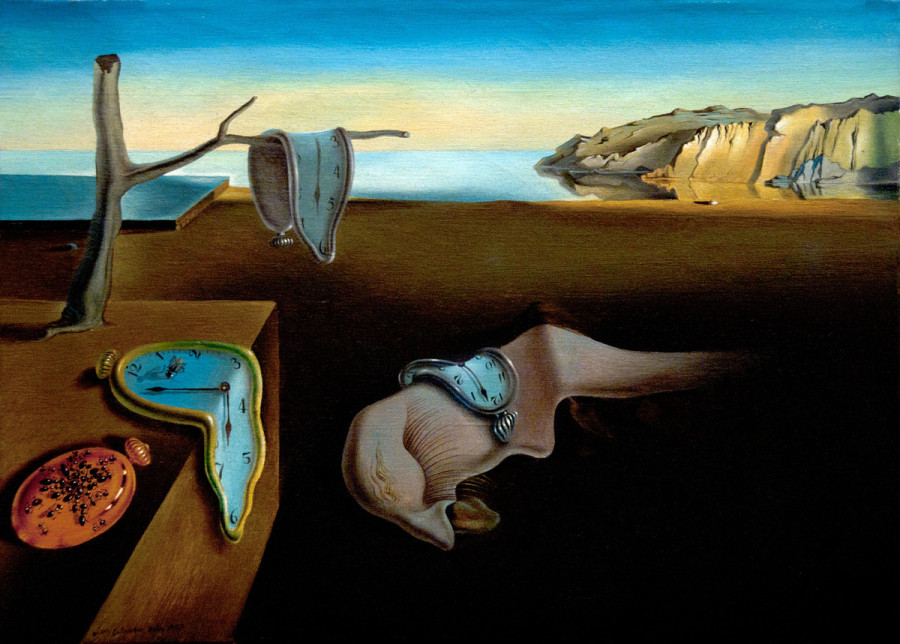
Time lost...

In Three Lives and Only One Death we deal with a distortion of time and reality. The first character played by Marcello Mastroianni (Let's call him Marcello 1) recounts to a man in a bar named Andre that he was married to the man in the bar's wife at one time. Marcello 1 says the house he lives in is inhabited  by time eating fairies and coaxes Andre to come there where he kills him and goes to Andre's house and reunites with his ex-wife as if no time had elapsed between the time he left her and the present. 

The next three tales all deal with variations of a sort of time displacement and all the stories feature Marcello Mastoianni in roles both large and small. He plays a butler, a businessman and a professor (Marcello 2, 3 and 4?). The lives of the characters in the different stories begin to intersect in interesting ways. A baby from story three is delivered to the wife in story two or the works of a mysterious writer named Carlos Casteneda is a theme. Are these characters real in the context of the movie? They meet and begin to cause havoc on each other by the end of the film.

I did like it, but if there was ever a list of movies to re-watch to get more meaning out of, Three Lives and Only One Death would be near the top.

Marcella Mazzarella as Proust
with Catherine Deneuve 
in Time Regained

and time regained...

How about a movie about Proust to follow up Three Lives and Only One Death? Time Regained is a sort of biography of Proust...sort of. We see Proust on his deathbed...and then we go back to remembrances of things past. Is what is happening happening then or is it just a dream? I hear the clock ticking. There are a lot of flashbacks here and the plot is intentionally all over the place. I don't think a straightforward biography of Proust would be appropriate anyway, so I guess this is the way to go. It doesn't make making sense of it any easier.

This might also benefit from a re-watch, but I think I'd rather just read some brief passages from Swann's Way and be done with it.

Chilean filmmaker Raul Ruiz directed both of these films. He made plenty of others if I ever feel up to the challenge!

Image result for painting about time

Wednesday, May 15, 2019

THE ENGLISH PATIENT (1996), WHEN WE WERE KINGS (1996)

1996
The English Patient

The English Patient is the Oscar winning film that features the story of a World War II romance told partly in the patient's makeshift sickbed and partly in flashbacks. The movie was one of the first movies I went to with my wife after I got married. To tell you the truth, I found it a bit long and kind of dull, I think I even dozed off during the screening. It was well made, though.

My recent viewing is the first time I've seen it since and I still think it's well made and the story interested more this time. The burned and dying Count/English patient (Ralph Fiennes) tended by his nurse (Juliet Binoche) juxtaposed over the romantic relationship of  the Count and his love, Katharine (Kristin ScottThomas) has some appeal. I guess the romantic in me still lives on here and there.

You may recall the episode of Seinfeld in which Elaine seems to be the only one in the world who doesn't love The English Patient ("Thought it would never end."). I did re-watch that episode and it's especially funny right after you've seen the movie.

Seinfeld (The English Patient)


Image result for when we were kings ali
When We Were Kings


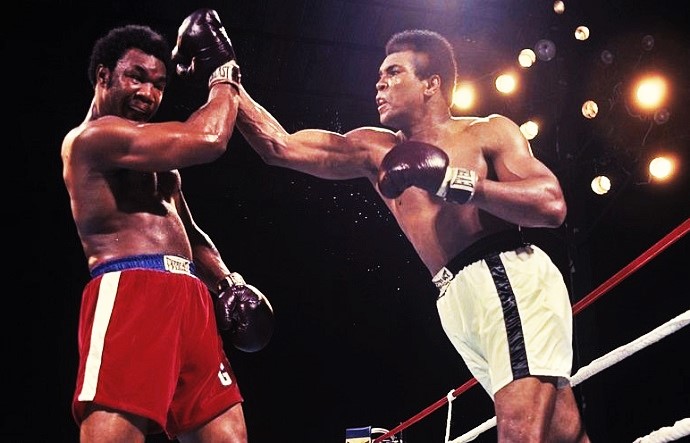
The Oscar winner for Best Documentary for 1996 went to When We Were Kings, a film about the Muhammad Ali-George Foreman title fight in 1974. Even though in the Rocky films, the character of Apollo Creed is based on Ali, one has to remember that before the Ali-Foreman fight, it was Ali who was more like an underdog Rocky. Foreman was undefeated and seemingly unstoppable and Ali was trying to make one more run at the title at age 32. The film recreates all the moments: The Zaire setting, the delay before the match caused by a Foreman injury, the music of James Brown, Howard Cosell and of course the fight itself (Forever know as The Rumble in the Jungle). The usually dancing Ali just stood and took Foreman's blows (rope-a-dope) before Foreman punched himself out and Ali knocked an exhausted Foreman out in eighth round, and further cemented his legendary status as "The Greatest of All-Time!". 

The film serves as a great historical document of the fight and the time.

I definitely had this issue of SI

Here are some other films I have seen that were first released in 1996 that are not in the 1001 book.

Beavis and Butt-Head Do America
My wife says, "They seem like they'd be mostly funny to twelve year old boys."
I reply to her in a Butthead voice, "Huh Huh Huh"
Beavis and Butt-Head Do America

The Birdcage
Thoroughly entertaining adaptation of La Cage Aux Folles featuring Robin Williams in one of his best roles.
The Birdcage

The Chamber
I've listened to the audiobook and watched the movie, but I had to jog my memory to remember what this one was about. I did think it was one of Grisham's better books, now that my memory is properly jogged.
The Chamber


Diabolique
The original was memorably well done, even with its moments of being on the far-fetched side. From what I remember, the remake doesn't really cut it nearly as well. Might be worth another look, though.
Diabolique '96

Diabolique '55

Everyone Says I Love You
Kind of funny film that has stars who don't sing all that well but give it the 'ole college try. It may be worth it just to hear Julia Roberts warble.
Everyone Says I Love You

Evita
If you're interested in Andrew Lloyd Webber's long journey to get Evita on the big screen, check out his memoir Unmasked. Nothing against the 1996 version, but I would have liked to see the proposed version with Karl De Vito from the 80's made. So it goes.
Evita


The First Wives Club
I saw this at the theater with my wife the first year we were married. Don't tell her, but I'm not a big fan...
The First Wives Club

Ghosts of Mississippi
Would make a good double feature with Mississippi Burning. I think the latter is a better film, but Ghosts may a good candidate for a revisit.
Ghosts of Mississippi


Hamlet
The definitive film version of Hamlet, At least, if you want to see the whole bloody play on film!
Hamlet

The Hunchback of Notre Dame
This was one of the better Disney '90's animated features, but the 1923 Lon Chaney version will always be the one that haunts me.
The Hunchback of Notre Dame '96

The Hunchback of Notre Dame '23

Jack
You would have thought a Francis Coppola movie with Robin Williams reverse aging might be better than it was. Oh, Well. Watch on a double bill with Benjamin Button anyway.
Jack


The Curious Case of Benjamin Button

James and the Giant Peach
This one was sad, but well done.
James and the Giant Peach

Jerry McGuire
At this point, whenever I think of this movie, I think of the guys who opened up a video store in Los Angeles that have nothing but VHS copies of Jerry Maguire. I love those guys!
The Jerry Maguire Movie

The Jerry Maguire Store

Jingle All the Way
Arnold and Sinbad fight to get Turbo Man for Christmas. Why didn't they just call this movie Turboman? Or The Hunt for Turboman? Or Waiting for Turboman? Or Where's Turboman? You get my drift.
Jingle All the Way

Kingpin
Maybe my favorite of the Farrelly Brothers comedies. Stupid a lot of the time, but so funny!
Kingpin

The Long Kiss Goodnight
Speaking of stupid, this movie is far-fetched even by action movie standards. But you know what, it's damn entertaining.
The Long Kiss Goodnight

Looking for Richard
Famous actors like Al Pacino and Kevin Spacey work on putting on a version of Richard III. It's pretty interesting for theaterphiles. Watch as a double feature with Ian Mckellan's Richard III.
Looking for Richard

Richard III

Mars Attacks!
Tim Burton's comedic answer to Independence Day. Between the two, I'd certainly choose Mars Attacks!
Mars Attacks

Independence Day


Michael
The John Travolta as an alien movie is kind of "meh" for me.
Me

The Mirror Has Two Faces
One strange thing about this movie is that Barbara Streisand doesn't look that bad when she's supposed to be frumpy and not that great when she's supposed to be attractive.
The Mirror Had Two Faces

Mystery Science Theater 3000
The theatrical version of one of my favorite shows probably isn't the finest moment of MST3K.
 Mystery Science Theater 3000 '96: Mike and the Bots

 Mystery Science Theater 3000 '93: Joel and the Bots

The Nutty Professor
Eddie Murphy's funny re-imagining ot the Jerry Lewis classic. ("Mike Douglas used to make me moist!")
 The Nutty Professor "96

The Nutty Professor '63

One Fine Day
George Clooney and Michelle Pfeiffer are single. They both have kids. They try to date and...Okay, the memory on this one isn't good.
One Fine Day

The People vs.Larry Flynt
Woody Harrleson and Courtney Love are both good in this Milos Forman film about love, the law, Jerry Falwell and Hustler magazine.
The People vs. Larry Flynt

Phenomenon
An unknown force makes John Travolta smart. Definitely better than Michael.
Phenomenon

Primal Fear
Legal drama dominated by Edward Norton's schizophrenic performance.
Primal Fear

Ransom
I'm not paying your ransom for kidnapping my kid. I'm using this money to put out a hit on you!
That was the major selling point of this film remake of an episode of United States Steel Hour from 1954.
Ransom

Space Jam
The whole Warner Brothers cartoons, Michael Jordan and Bill Murray playing space aliens in basketball is really a strange brew, isn't it?
Space Jam

Spy Hard
The Weird Al Video at the beginning is really the main thing I remember from this one. Did I actually see the whole thing?
Spy Hard


Star Trek: First Contact
Probably the best of the Star Trek: Next Generation films. Beware the Borg!
Star Trek: First Contact

That Thing You Do!
Fun Tom Hanks film set in the early 60's featuring a one hit wonder band.
That Thing You Do!

Tin Cup
Pretty good Kevin Costner/Ron Shelton follow up to Bull Durham. Only it involves golf this time. I'd love to see a real golf tournament to end in a mental breakdown like Costner has at the end of this movie. Rare film that has supporting roles for Craig Stadler, Corey Pavin, Johnny Miller, Fred Couples, etc.
Tin Cup

The Truth About Cats and Dogs
Can we handle the truth about Cats and Dogs?
The Truth About Cats and Dogs

Twelfth Night
Trevor Nunn's vibrant, open space Twelfth Night would make a good double feature with Trevor Nunn's bare bones Macbeth from 1976.
Twelfth Night

Macbeth

Twister
Tornado hunters try to rekindle a romantic bond through some turbulent weather.
Twister

Up Close and Personal
Wasn't this supposed to be a movie based on the life of Jessica Savitch and it morphed into something a little more lightweight? At least that's the way I remember it.
Up Close and Personal