Tuesday, October 1, 2019

THE GARDEN OF THE FINZI-CONTINIS (1970, ITALY), CHRIST STOPPED AT EBOLI (1979, ITALY), NIGHT OF THE SHOOTING STARS (1982, ITALY)

The Garden of the Finzi-Contitis

Vittorio de Sica's The Garden of the Finzi-Contitis shows the slow descent of the lives of some affluent Italian Jews during the coming of Fascism before World War II. They learn that they may not be first on the list, but the oppressors will eventually come for them and even if they do have the ability to hide behind a wall for the time being.

We would like to reach up to the screen and shake them (the family) by the shoulders, even though there's reason to think that they were warned often enough...(They felt) Anti-Semitism,  like bad taste could never hurt them if it were thoroughly avoided.-David Denby, New York Times, January 2, 1972


Christ Stopped at Eboli

Christ Stopped at Eboli is the story of a doctor who is exiled to a small town. He eventually forms a bit of a bond with some of the citizens there who need his services as a doctor. We see the doctor originally by his situation forced to be an outsider and then how he comes to be needed by the people of the town. He also realizes how his situation is forced by powers out of his control, but manages hints of self determination and individuality despite the limitation put on him by his captors.

This is director Francesco Rosi's masterpiece, and seeing it, in either its two or three and a half hour version, is a cathartic experience, with unforgettable moments. M. Owen Lee, The Best Films of Our Years, 2007

Night of the Shooting Stars


During the last stages of World War II, a group of citizens try to escape a small village and meet up with Allied soldiers. Night of the Shooting Stars is interesting in that by necessity the villagers have to leave their home and seek freedom elsewhere. The village is not the houses and the stores and the church. It's the people.

The full fresco treatment that the directors give to the event of that summer is based on their own wartime experiences as adolescents, and on the accounts of others; it's this teeming, fecund mixture, fermenting in their heads for almost 40 years, that produces the film's giddy, hallucinated realism.-Pauline Kael, 5001 Nights at the Movies, 1985

Monday, September 30, 2019

THREE LIVES AND ONLY ONE DEATH (1996, FRANCE), TIME REGAINED (1996, FRANCE)

Marcello Mastroianni 
in Three Lives and Only One Death

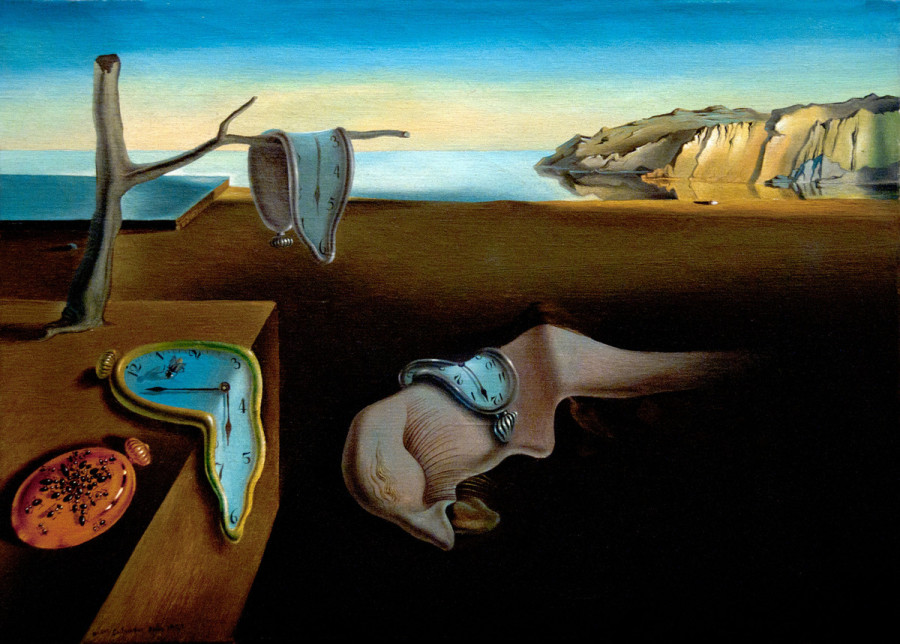
Time lost...

In Three Lives and Only One Death we deal with a distortion of time and reality. The first character played by Marcello Mastroianni (Let's call him Marcello 1) recounts to a man in a bar named Andre that he was married to the man in the bar's wife at one time. Marcello 1 says the house he lives in is inhabited  by time eating fairies and coaxes Andre to come there where he kills him and goes to Andre's house and reunites with his ex-wife as if no time had elapsed between the time he left her and the present. 

The next three tales all deal with variations of a sort of time displacement and all the stories feature Marcello Mastoianni in roles both large and small. He plays a butler, a businessman and a professor (Marcello 2, 3 and 4?). The lives of the characters in the different stories begin to intersect in interesting ways. A baby from story three is delivered to the wife in story two or the works of a mysterious writer named Carlos Casteneda is a theme. Are these characters real in the context of the movie? They meet and begin to cause havoc on each other by the end of the film.

I did like it, but if there was ever a list of movies to re-watch to get more meaning out of, Three Lives and Only One Death would be near the top.

Marcella Mazzarella as Proust
with Catherine Deneuve 
in Time Regained

and time regained...

How about a movie about Proust to follow up Three Lives and Only One Death? Time Regained is a sort of biography of Proust...sort of. We see Proust on his deathbed...and then we go back to remembrances of things past. Is what is happening happening then or is it just a dream? I hear the clock ticking. There are a lot of flashbacks here and the plot is intentionally all over the place. I don't think a straightforward biography of Proust would be appropriate anyway, so I guess this is the way to go. It doesn't make making sense of it any easier.

This might also benefit from a re-watch, but I think I'd rather just read some brief passages from Swann's Way and be done with it.

Chilean filmmaker Raul Ruiz directed both of these films. He made plenty of others if I ever feel up to the challenge!

Image result for painting about time

Wednesday, September 25, 2019

THE HOUSEMAID (1960, KOREA), THE HOUSEMAID (2010, KOREA)

The Housemaid 1960

Kim Ki-young's 1960 The Housemaid is a film that seems quite ahead of its time with its dark tones, bleak characters and familial violence.

The plot has a piano teacher at a factory who has to struggle to make ends meet for his wife and two kids. A couple of the women at the factory develop a crush on the teacher, one of whom becomes the family housemaid and ends up having an affair with the admittedly reluctant teacher. The housemaid gets impregnated by the man and ends up controlling the whole family through blackmail. She ends up being responsible for the death of one of the children before the housemaid and the man commit suicide in front of his innocent wife. But wait...there is an afterword that repeats the first scene where the man reads to his wife a newspaper story about a housemaid that has an affair with her boss and the wife laughs it off. The man then turns to the camera and tells the audience to watch out and not let this happen to you. It may seem like a little bit of an "it was all a dream ending," but I'm guessing the filmmaker or the studio was too afraid to let the extremely dark ending play itself out without giving the audience a sign of reassurance. The film definitely reminds me of later films such as Fatal Attraction and The Hand Rocks the Cradle.

The Housemaid 2010

The 2010 version of The Housemaid was so different than the original I had to check to see if it was actually a remake. (It is so listed in the credits). This go round is clearly from the point of view of the housemaid, who gets employed into a house with a rich family this time. The husband is not a struggling piano teacher, but a rich businessman who has no qualms about using anyone how he pleases. His wife is a class A bitch (unlike the good wife of the original), whose mother is even worse than the daughter! The only sympathetic member of the family is the child who does bond with the housemaid. The housemaid does have an affair with the husband, but our sympathies are completely with her this time out. The husband does play the piano, which does give this one some link to the original. If the original had an overly comforting ending, the 2010 makes up for it with the housemaid committing suicide in front of the family in dramatic fashion. Nothing comforting about the conclusion here.

These Housemaid movies made for an interesting double feature, though I'd certainly watch the first one before deciding whether you want to delve into the remake or not.

Friday, September 20, 2019

PICNIC AT HANGING ROCK (1975, AUSTRALIA), THE CHANT OF JIMMIE BLACKSMITH (1978, AUSTRALIA), SLEEPING DOGS (1977, NEW ZEALAND), UTU (1983, NEW ZEALAND)

Spooky and Sexy...a horror-romance...hints of unexplored sexuality that combine to produce a euphoria so intense it becomes transporting.-Vincent Canby, The New York Times

Picnic at Hanging Rock

The above review from Vincent Canby is about as enthusiastic a film recommendation as I have ever read from him. I would have disagreed with this assessment the first time I saw Picnic at Hanging Rock on the USA network during the 80's. You honestly have to be in the right frame of mind to appreciate this (at least I did.)
It's a true story about a group of girls that go missing on a picnic in 1900 Australia. Except, it isn't really a true story. We try to find out the mystery of what happens to them. Except it isn't a mystery. It turns time upside down, but in subtle ways. It has lots of other layers to it, including class, adolescence, sex and authority. It only took me thirty years, but I think I got it this time out.

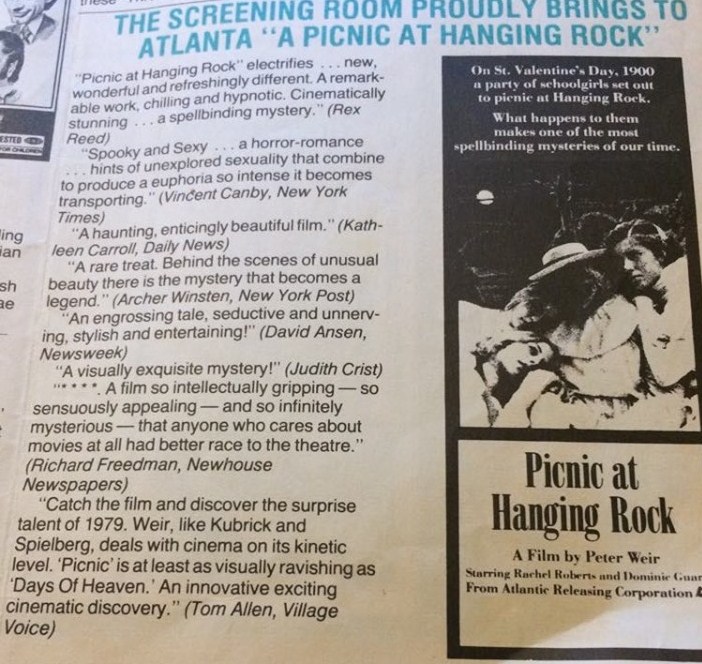
Add from my copy of
Atlanta's  July 1979 Screening Room calendar

I didn't know what to expect from the The Chant of Jimmie Blacksmith, although I've heard about the film for years. I wouldn't say I was expecting a nascent version of Crocodile Dundee, but what I wasn't expecting was a late 70's down under version of Django Unchained! Jimmie is a half-aborginal, half-white who despite being raised by a proper family, seems to be thwarted at every turn by society and certainly by a series of grotesque employers. He goes over the edge and seeks out violent revenge on any that have done him wrong in the past (and some that just got in the way). Rooting for or against Jimmie and the society he rebels against is part of the conundrum here. It's up to the viewer to figure that out.


The Chant of Jimmie Blacksmith

Sleeping Dogs is a down-under (New Zealand) thriller about a man named Smith (Sam Neill) who is breaking up with his wife and just wants to get away for awhile with his dog at the lake so he can relax and do some fishing. Little does he know, he's being set up to be a patsy for a revolutionary uprising. He gets arrested and put in jail and is given the ultimatum of confessing and leaving the country or being executed. He escapes on the way to give his confession and the action...well, the action sort of stops there for awhile. How many thrillers can you name where the star gets a job cutting grass at a motel half way through the picture? He actually does get involved with the resistance, ironically buddying up with the guy who is involved with his wife. He also gets involved with a local girl at the motel he is hiding at and a group of American mercenaries led by the always watchable Warren Oates.

Sleeping Dogs


Spoiler: Pretty much no one's getting out of this one alive, though we never find out what happens to Smith's loyal lake dog, last seen desperately trying to swim out to Smith in the early part of the film as he's being taken away by authorities.

Sleeping Dogs: One of these characters flanking Sam Neill 
is going to double cross him. Guess which one won't?

Revenge is also the motive for Te Wheke Utu (Revenge is what Utu means) of New Zealand director Geoff Murphy's film about a Maori captain in the British army who swears his revenge on his former allies after a massacre of a peaceful village and becomes the invading army's worst nightmare. Part Death Wish, and part Chant of Jimmy Blacksmith and maybe a little of Dances With Wolves in reverse thrown in...ah, forget the comparisons. It is a good film on its own and has some very good scenes of guerrilla warfare and magnifies once again the perils and danger for the white man in the heart of darkness...especially when you don't belong there in the first place! 

Utu plots his revenge